Saturday, January 5, 2013

Templo de San Felipe Neri


Uno de los mas notables monumentos coloniales del siglo XVII, cuya edificación dio principio en 1633, cuando llegaron los fundadores bajo la dirección del presbítero Don Juan de Aragón, quienes organizaron desde Europa la "Pía Unión" o "Concordia" en 1661. Pero quien se distingue por consolidar y robustecer este oratorio, por haber solicitado y obtenido la autorización del papa Clemente XIII, allá en los años de 1728 a 1729, fue el Lic. y presbítero Don Juan Saenz de Leyva Cantabrano y Zorrilla.

Sin embargo la construcción formal comenzó hasta 1733 y terminó el 17 de enero de 1773, excepto los campanarios que datan del siglo XIX, fecha en que se consagró a la virgen del Patrocinio y desde luego al fundador de la congregación San Felipe Neri, cuya imagen se admira en el altar mayor, obra de arte de primera magnitud en donde sobresale el más puro estilo de Churriguería Mexicana.


La hermosa fachada realizada en cantera verde es un vestigio del Plateresco del siglo XVI, aunque el estilo de la construcción en general es barroco. En la parte central de esta fachada aparece en bajo relieve y cantera amarilla San Felipe Neri, con bonete y un libro en la mano que ya no se distingue, tal vez por la acción del tiempo o la destrucción del hombre, ya que este edificio, como otros tantos, han servido de baluarte en las guerras civíles. A esto se debe quizá que los nichos de la portada estén vacíos.

Dignos de admiración son los retablos interiores, en donde se hallan pinturas de Juan de Páez y Agustín de Santaella.
La planta es de una nave con cúpula y crucero, es decir , está dispuesto en forma de cruz latina. Las torres se terminaron en 1803, año en que fueron bendecidas y puede decirse, hasta entonces se dio por terminada la construcción de este templo, en cuyo interior existe un panteón con diez sepulcros en donde yacen los cuerpos de los sacerdotes y fundadores de esta Orden.

En este templo contrajo matrimonio Don Benito Juárez García con Doña Margarita Maza el 31 de julio de 1843.


My translation of the above.

One of the most remarkable monuments of the seventeenth century colonial era, whose construction began in 1633, under the direction of the priest Don Juan of Aragón, who organized in Europe the "Pious Union" or "Concordia" in 1661, but is distinguished by consolidating and strengthening this chapel, having sought and obtained the permission of Pope Clement XIII, in 1728 and 1729.

The formal construction started in 1733 and ended January 17, 1773, when it was consecrated to the Virgin of the of patronage and San Felipe Neri, whose image may be admired in the main altar, a work of art in the style of Mexican Churriguería, which is an architectural style from a family of eighteenth century Spanish architects and sculptors.

The beautiful green stone facade is a vestige of the plateresque style of the sixteenth century, although the style of construction generally is Baroque. In the central part of this front, San Felipe Neri appears in low relief yellow quarry stone, with a bonnet and a book in his hand already indistinguishable, perhaps by the action of time or the destruction of man, since this building, like many others, has served as a bulwark in the civil wars. For this, perhaps, it is why the niches of the front are empty.


Worthy of admiration are the interior alter pieces, where there are paintings of Juan de Páez and Agustín de Santaella. The church is a nave with dome and transept, that is, it is built in the form of a Latin cross. The towers were completed in 1803, when they were blessed  it could be said that the construction of this temple was considered completed. In the interior there is a pantheon with ten tombs where lie the bodies of the priests and founders of the Order.

Here, on July 31, 1843, Don Benito Juarez Garcia married Margarita Maza.


Saturday, December 29, 2012

El sueño de Elpis


La siguiente descripción es de un blog relacionado con el proyecto de arte, www.elpisblog.org.

Proyecto artístico de Mauricio Cervantes , que involucra a artistas visuales, músicos, compositores y varios agentes de la sociedad que no necesariamente pertenecen al mundo del arte: permacultores, campesinos, jardineros, parteras, sanadoras, maestros de escuelas rurales.


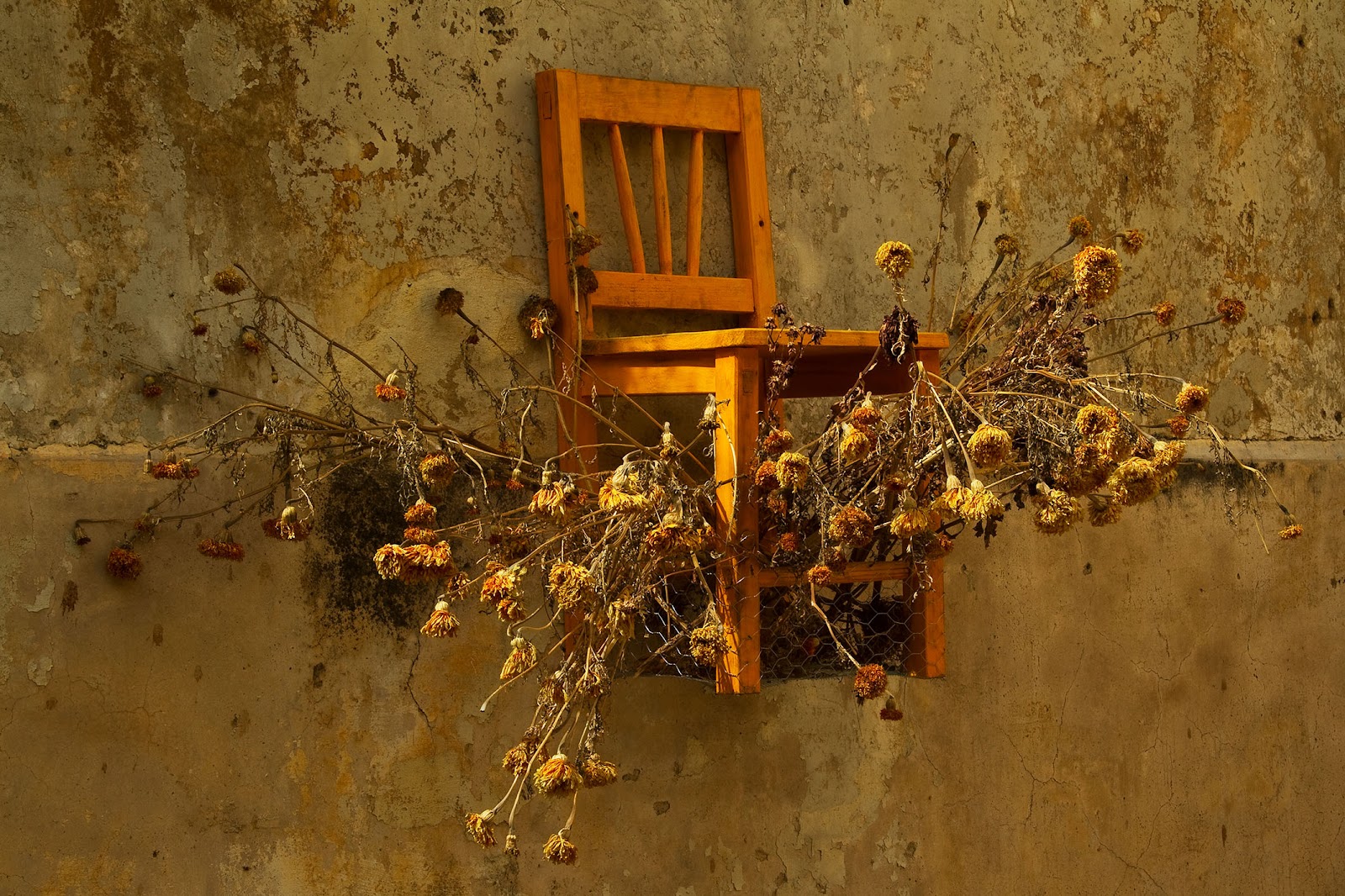
La culminación será la ocupación—textualmente— de MATRIA, una casa en ruinas ubicada en la calle de Murguía 103, en el Centro Histórico de Oaxaca.


La ocupación de MATRIA con las intervencions artísticas será la culminación de una serie de acciones poéticas que se han efectuado en varios momentos del calendario estacional desde 2011.


Se ocupará la casa con esculturas, intervenciones lumínicas con neones e instalaciones sonoras por un espacio de ocho semanas, a partir del 1 0 de noviembre de 2012.

MATRIA servirá como espacio escénico para la presentación de conciertos y proyecciones cinematográficas.


De este modo MATRIA se convertirá en el espacio donde convivirán actores presenciales con presencias espectrales.

Tengo más fotos en mi álbum web de Picasa.
Para más información sobre el concepto del proyecto le animo a leer aquí.


The following description is from a blog connected with the art project, www.elpisblog.org.  The blog is in Spanish and contains links to other organizations involved in the work.  Google will give you an adequate but not elegant translation.  You may need to cut and paste the link into your search engine in order to activate translation.


El sueño de Elpis is an art project by Mauricio Cervantes , involving visual artists, musicians, composers and various actors in society that do not necessarily belong to the art world: permaculture, farmers, gardeners, midwives, healers, teachers in rural schools.


The culmination will be the occupation of Matria, a dilapidated house located at 103 Murguía Street, in the historic center of Oaxaca.  The occupation of Matria with artistic interventions will culminate with of a series of poetic actions.  It will occupy the house with sculptures, interventions with neon lighting and sound installations for a period of eight weeks from November 1st, 2012.  Matria will serve as performance space for the presentation of concerts and film screenings.


Art, as a reason for the project becomes a hinge on a meeting point in a thread, in a social pollinator, in the scenario that brings together the voices of a community. Beds and flowers, marigolds, are the main elements of the sculptures and installations placed in every corner of the house. The bed is the place where dreams are distilled, and where lovers lie.  It's design provides for the enjoyment of the lovers.


I have more photos on my Picasa web album.
For more on the concept of the project I encourage you to read here.


At sunset the light starts to come alive and gets augmented with fluorescent lights and sounds.


Tuesday, December 25, 2012

La Noche de los Rabanos, reprise 2012

Here are a few shots from the 2012 La Noche de los Rabanos.  There are three major categories, radishes, dried flowers, and corn husks.  Oh yes, the mandatory 'fuegos artificiales' or fireworks.  Sorry there's no sound, sort of dull that way.


First a dried flower figure
Doña Rosa
Don Quixote
Lucha Libre
Frida Kahlo
El dios de los muertos
Fantasy figures
A new idea for your next year's tree

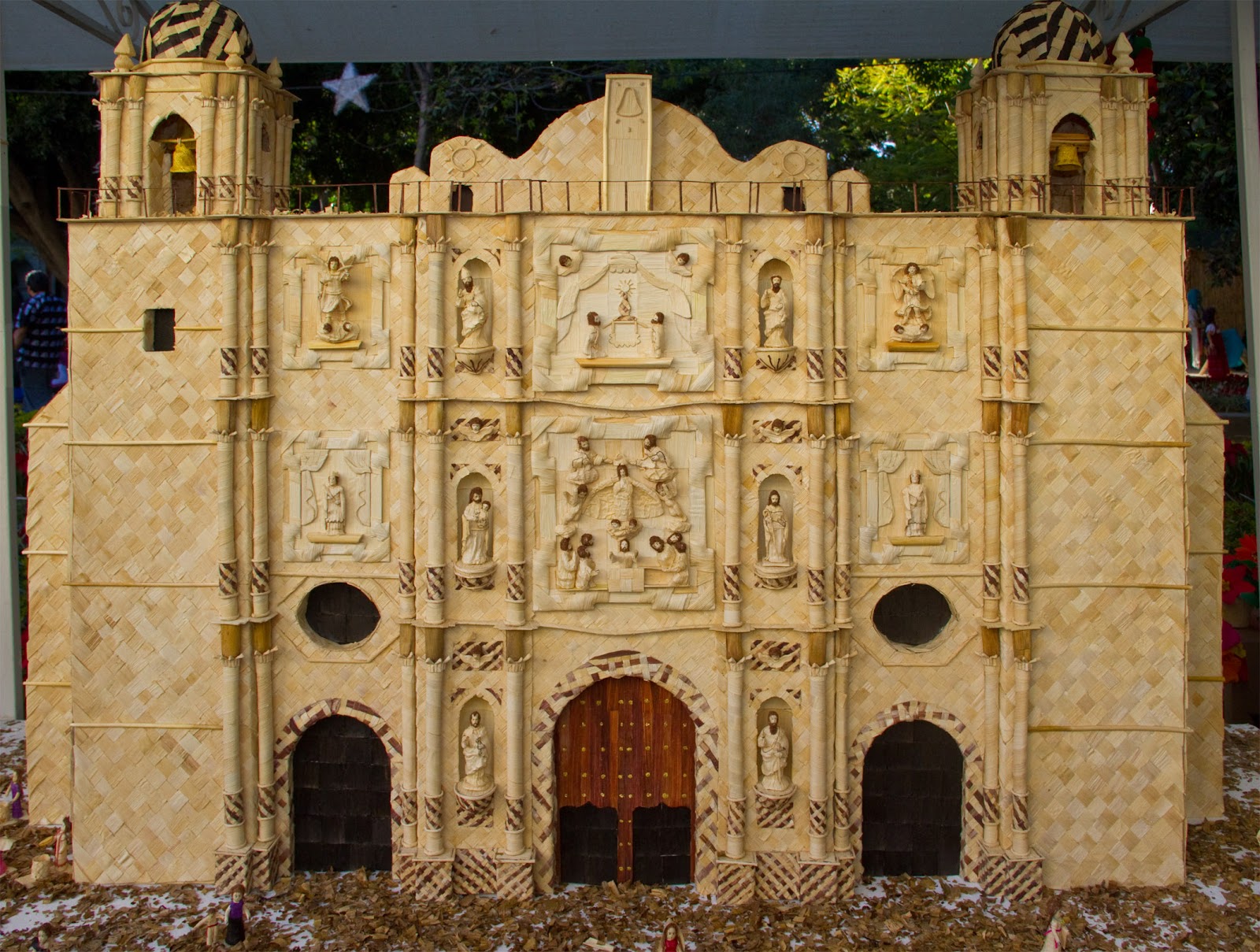
They work on the corn husk figures year round and add to things year by year making the results quite elaborate and spectacular.
World's largest chica banda


La Catedral en el año 1887 (note the detail in the statues below)


The full scale stone version is so much better for fireworks
Nice that there was a moon out


For a closer look with more photos please visit my Picasa Web Album.  I have a earlier post HERE along with another couple of web albums HERE and HERE from prior years.

Saturday, December 22, 2012

Virgen de Guadalupe


In Oaxaca in December, before one can arrive at La Noche Buena, Christmas Eve you must traverse many other festivals.  On December 8th there is la fiesta de La Virgen de Juquila, the Feast of the Virgin of Juquila.  On December 12th there is la fiesta de La Virgen de Guadalupe, the Feast of the Virgin of Guadalupe, celebrated throughout Mexico.  Starting on December 16th are the first of nine traditional Posadas, one each night, including Christmas Eve.  On December 18th there is la fiesta de La Virgen de la Soledad, the Feast of the Virgin of Solitude, the patron saint of Oaxaca.  On December 23rd there is the La Noche de los Rábanos, or Night of the Radishes. Then finally on December 24th we come to La Noche Buena, Christmas Eve.  Afterwards there is New Years Eve; then on the first Sunday in January, the Paradita del Niño Dios; on January 6th, the feast of the Three Kings; and finally on Februray 2nd the Christmas season ends with La Candelaria or purification of the Virgin and the blessing of the infant Jesus. But this post is about Nuestra Señora de Guadalupe.

Nuestra Señora de Guadalupe, also known as the Virgen de Guadalupe is a celebrated Roman Catholic icon of the Virgin Mary and revered as the patron saint and Queen of all México. In Oaxaca there are many activities associated with this day, some religious such as the calendas or religious processions, as well as music, fireworks and the carnival rides.  


Now for a bit of history mixed with folklore.  Two accounts, published in the 1640s, one in Spanish, one in Nahuatl, tell how, while walking from his village to Mexico City in the early morning of December 9, 1531 on the Feast of the Immaculate Conception, the peasant Juan Diego saw on the slopes of the hill of Tepeyac a vision of a girl of fifteen or sixteen years of age, surrounded by light. Speaking to him in Nahuatl, the local language, she asked that a church be built at that site, in her honor.  Juan Diego recognized her as the Virgin Mary. Diego told his story to the Spanish Archbishop, Fray Juan de Zumárraga, who instructed him to return to Tepeyac, and ask the lady for a miraculous sign to prove her identity. The first sign was the healing of Juan's uncle. The Virgin told Juan Diego to gather flowers from the top of the hill of Tepeyac. Although it was December, Juan Diego found Castilian roses, not native to Mexico, at the usually barren hilltop. The Virgin arranged them in his peasant cloak. When Juan Diego opened the cloak before Bishop Zumárraga on December 12, the flowers fell to the floor, and in their place was the image of the Virgin of Guadalupe, miraculously imprinted on the fabric. The Basílica de Nuestra Señora de Guadalupe was built near the location where the Virgen appeared to Juan Diego. Construction of the old basilica began in 1531 and was not finished until 1709.  The devotion to la Nuestra Señora de Guadalupe grew to be so important that in 1754 a papal bull was issued proclaiming the Virgin of Guadalupe as the Patroness and Protector of New Spain. In 1810 she was adopted as the symbol of Mexican Independence and in 1904 Pope Pius X elevated the church built on the site to the category of basilica.


From Patricia Harrington, "The Aztecs ... had an elaborate, coherent symbolic system for making sense of their lives. When this was destroyed by the Spaniards, something new was needed to fill the void and make sense of New Spain ... the image of Guadalupe served that purpose."

The Conquistador, Hernán Cortés, was a native of Extremadura, in Spain, home to Our Lady of Guadalupe. By the 16th century the Extremadura Guadalupe, a statue of the Virgin was already a national icon. It was found at the beginning of the 14th century when the Virgin appeared to a humble shepherd and ordered him to dig at the site of the apparition. The recovered Virgin then miraculously helped to expel the Moors from Spain, and her small shrine evolved into the great Guadalupe monastery. One of the more remarkable attributes of the Guadalupe of Extremadura is that she is dark, like the Americans, and thus she became the perfect icon for the missionaries who followed Cortés to convert the natives to Christianity.  According to secular history, in 1555 Bishop Alonso de Montúfar commissioned a Virgin of Guadalupe from a native artist, who gave her the dark skin which his own people shared with the famous Extremadura Virgin.  Whatever the connection between the Mexican and her older Spanish namesake, the fused iconography of the Virgin and the indigenous Nahua goddess Tonantzin provided a way for 16th-century Spaniards to gain converts among the indigenous population, while simultaneously allowing 16th century Mexicans to continue the practice of their native religion.


Guadalupe continues to symbolize a mixture of the cultures which blended to form Mexico, both racially and religiously, "the first mestiza", or "the first Mexican".  As the Christians built their first churches with the rubble and the columns of the ancient pagan temples, so they often borrowed pagan customs for their own cult purposes. Guadalupe is a "common denominator" uniting Mexicans who are composed of a vast patchwork of differences – linguistic, ethnic, and class-based.  The Virgin of Guadalupe is the bond that binds this disparate nation into a whole. In 1974 Nobel Literature laureate Octavio Paz wrote, "the Mexican people, after more than two centuries of experiments, have faith only in the Virgin of Guadalupe and the National Lottery".

All of the area around the Llano Park in front of the Iglesia de Guadalupe is filled with carnival rides, puestos selling all sorts of things especially food, and special attractions for children.  The following is a montage of the rides in Llano Park.  Please visit my Picasa Web Album for more photos.