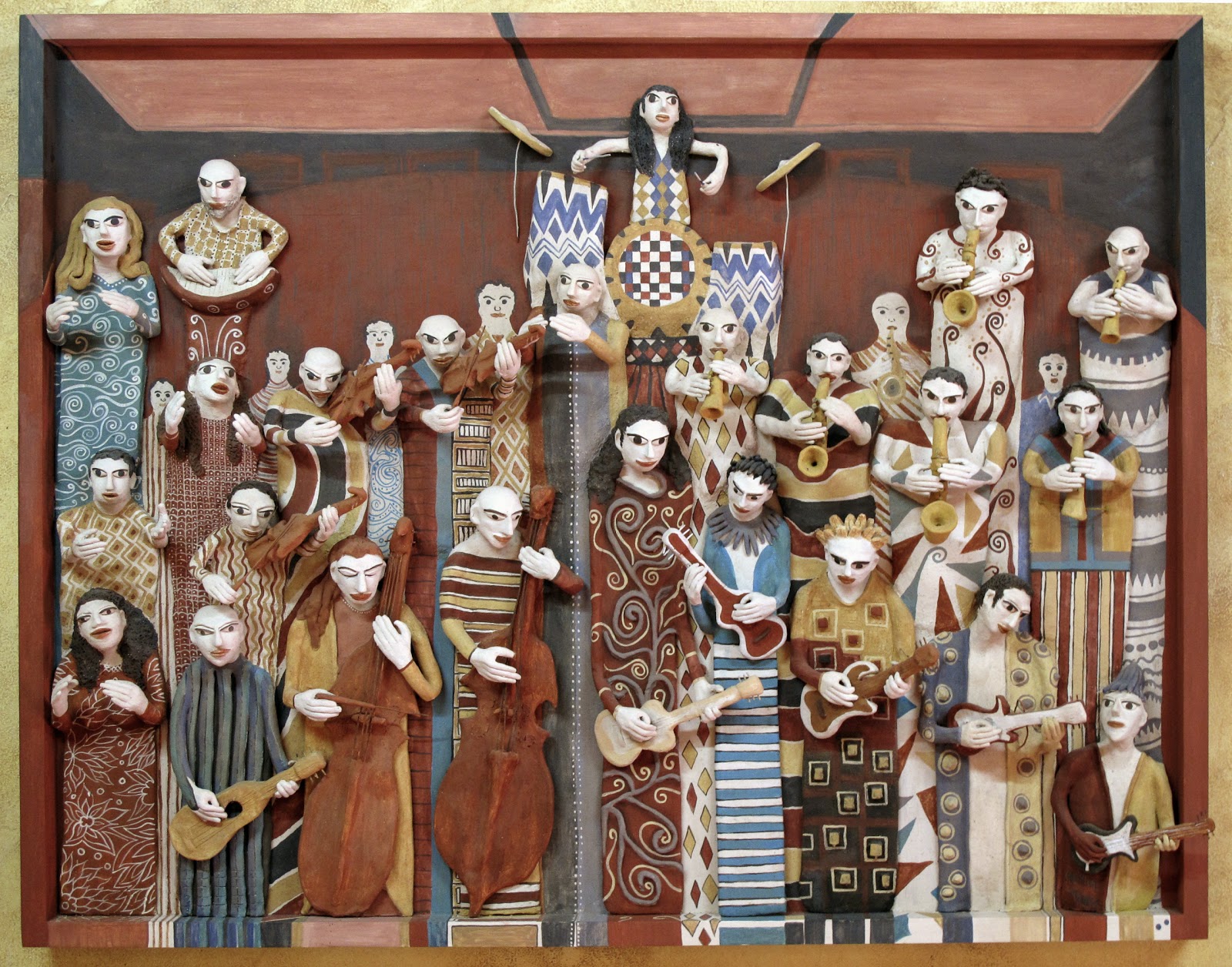
Santo Domingo Yanhuitlán es
un pueblo de la Alta Mixteca del estado de Oaxaca, situado al noreste de la
ciudad de Oaxaca. Su nombre proviene de la patrona de la ciudad (Santo Domingo)
y la última parte es del náhuatl. El pueblo está dominado por el Templo y
Ex-convento de Santo Domingo construido a partir de 1541. También es el hogar
de ceramista Manuel Reyes. Primero visitamos Manuel Reyes quien nació en la
Ciudad de México en diciembre de 1972 a los padres de Oaxaca.
Mis padres son de la Mixteca
Alta, en esta región del estado, y siempre me he considerado un oaxaqueño. Esa
es mi herencia, mi derecho de nacimiento. Aunque he tenido la formación de
algunos de los grandes maestros del arte mexicano, he desarrollado una gran parte
de mi estilo artístico de mirar y hablar con los artistas locales aquí en la
Mixteca.


Santo Domingo Yanhuitlán is a
village in the Mixteca alta of the state of Oaxaca, located northeast of Oaxaca
city. Its name comes from the patron saint of the town (Saint Dominic) and the
last part is from Náhuatl. The village
is dominated by the Templo y Ex-convento de Santo Domingo built in starting in
1541. It is also home to ceramic artist
Manuel Reyes. First we visit Manuel Reyes who was born in Mexico City in
December 1972 to Oaxacan parents.
My parents are from the
Mixteca alta, in this region of the state, and I've always considered myself a
Oaxacan. That's my heritage, my birthright. While I've had training from some
of the grand masters of Mexican art, I've developed a large part of my artistic
style from watching and speaking to local artists right here in the Mixteca.

En 1990 Reyes comenzó a
estudiar arte en la Escuela Nacional de Artes Plásticas en Xochimilco, Ciudad
de México. En 2003, Reyes regresó a la Mixteca a restablecido en sus raíces.
 " Las lecciones que
aprendí a través de mi entrenamiento formal han sido inestimables, pero obtener
inspiración y han adoptado técnicas no sólo de mis maestros, a quien le debo
mucho, pero también de los artistas y artesanos del barrio oaxaqueño de
Nochixtlán. " Reyes trabaja en conjunto con su esposa Maricela, un
talentoso artista en su propio derecho. " Lo que he aprendido de la gente
de mi cultura ha sido muy valiosa para mi trabajo, el uso de un horno de leña
hecho de barro y ladrillo, sobre los diferentes tipos de arcillas para esculpir
disponibles en Oaxaca y la forma de mezclar diferentes tipos de los suelos para
crear una amplia gama de colores de la pintura y los tonos y texturas. Al
final, mis piezas son producto de mi ambiente local. "
" Las lecciones que
aprendí a través de mi entrenamiento formal han sido inestimables, pero obtener
inspiración y han adoptado técnicas no sólo de mis maestros, a quien le debo
mucho, pero también de los artistas y artesanos del barrio oaxaqueño de
Nochixtlán. " Reyes trabaja en conjunto con su esposa Maricela, un
talentoso artista en su propio derecho. " Lo que he aprendido de la gente
de mi cultura ha sido muy valiosa para mi trabajo, el uso de un horno de leña
hecho de barro y ladrillo, sobre los diferentes tipos de arcillas para esculpir
disponibles en Oaxaca y la forma de mezclar diferentes tipos de los suelos para
crear una amplia gama de colores de la pintura y los tonos y texturas. Al
final, mis piezas son producto de mi ambiente local. "
In 1990 Reyes began studying
art at the Escuela Nacional de Artes Plásticas in Xochimilco, Mexico City. In
2003, Reyes returned to the Mixteca to re-established his roots.
"The lessons I learned
through my formal training have been invaluable, but I gain inspiration and
have adopted techniques not solely from my teachers, to whom I owe a great
deal, but also from the artists and craftspeople of the Oaxacan district of
Nochixtlán." Reyes works together with his wife Maricela, a gifted artist
in her own right. “What I've learned from the people of my culture has been
invaluable to my work, the use of a wood-burning kiln made of mud and brick,
about the different kinds of clays for sculpting available in Oaxaca and how to
mix different kinds of soils to create a broad range of paint colors and tones,
and textures. In the end, my pieces are products of my local environment."


Reyes explica la imaginería
sexual representa en sus esculturas actuales. "He estado haciendo un buen
número de hombres desnudos desde el año 2005, no inicialmente por el diseño
específico, sino más bien porque eso es lo que se representa a menudo en el
arte y las representaciones de las actividades del día a día prehispánica, y
ese es el tipo de trabajo que he disfrutado haciendo en los últimos tres años.
Cuando nos fijamos en las primeras figuras de barro zapoteca, y de hecho los
que datan de los olmecas y los primeros tiempos, eso es lo que mis antepasados
estaban creando. varias esculturas retratar la esperanza y la oración, así ,
por lo tanto una parte de la antigüedad, con la cabeza mirando hacia arriba a
los cielos y las manos en alto. "

Reyes experimentos con
máscaras como una forma de arte. Su uso en las fiestas es común en Oaxaca, la
tradición que se remonta quizás 3.000 años.
Manuel también le gusta el rock y el blues de los años 60 y 70 así como
un homenaje que ha creado figuras de John Lennon, Jimi Hendrix y Jim Morrison.
Para ver Juan y Jimi y más de la obra de Manuel visitar

Reyes explains the sexual
imagery depicted in his current sculptures. "I've been doing a fair number
with nude males since 2005, not initially by specific design, but rather
because that's what is often depicted in pre-Hispanic art and representations
of day-to-day activities, and that's the kind of work that I've enjoyed doing
over the past three years. When you look at the earliest Zapotec clay figures,
and in fact those dating to Olmec and earlier times, that's what my ancestors
were creating. A number of sculptures portray hope and prayer as well, so much
a part of ancient times, with head looking upward to the heavens and hands
raised."
Reyes acknowledges that this is still a business
so when gay male collectors began taking an interest in this phase of his
artistic development, it motivated him to continue and experiment with the
theme of male sexuality as depicted in the codices and sculptures of earlier
civilizations.