Showing posts with label arte. Show all posts

Monday, March 21, 2016

Casa de los Venados

Casa de los Venados es un 1700 m² casa y museo del folklore mexicano y el de arte contemporáneo propiedad de John y Dorianne Venator de Valladolid. Hay más de 3000 obras de arte en su colección.

Casa de los Venados (House of the Deer) is an 1700 m² private home and museum of Mexican folk and contemporary art owned by John and Dorianne Venator of Valladolid. There are over 3000 pieces of art in their collection.
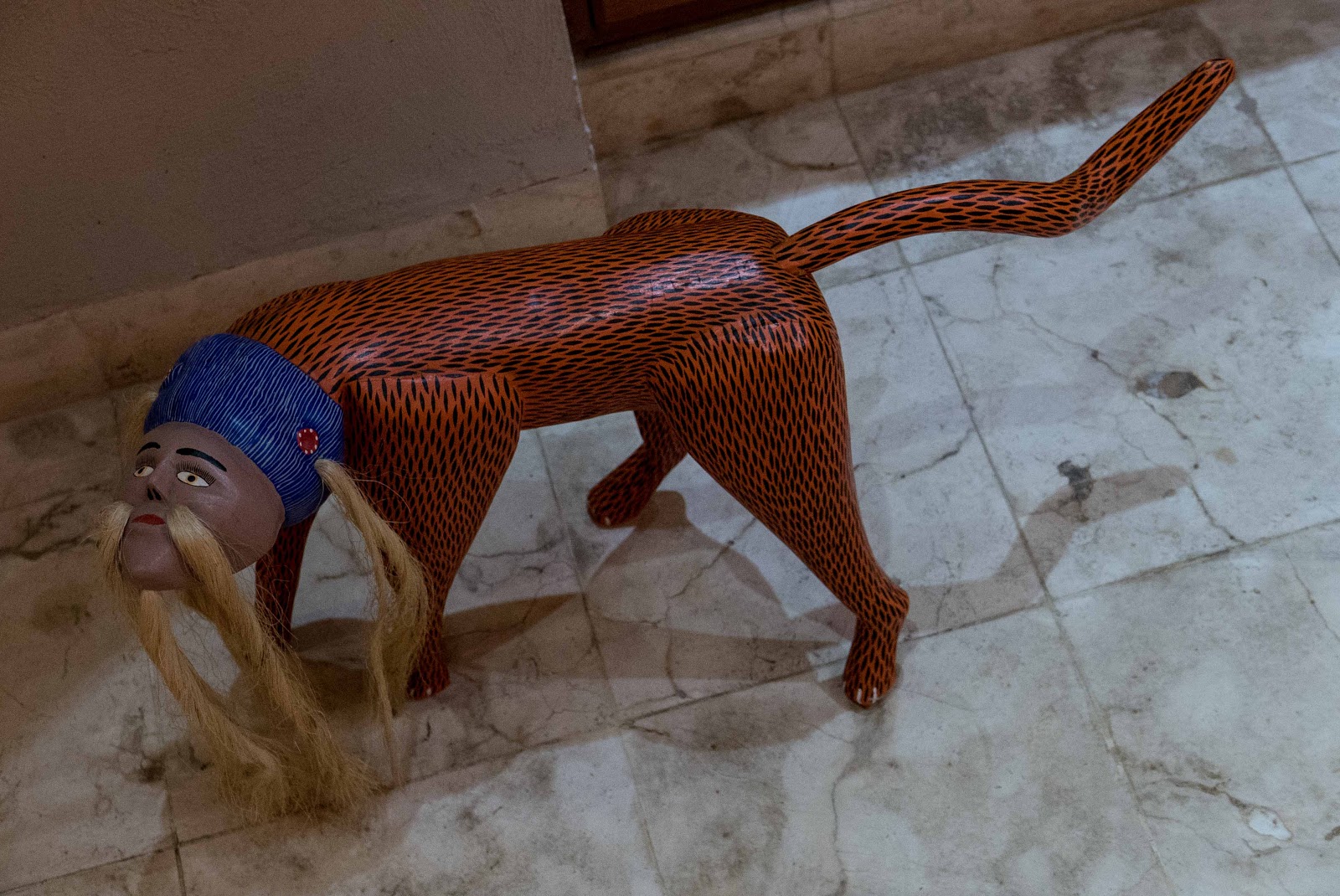

En el octubre de 2000, Venators vino a Valladolid para buscar una casa y encontró la que abandonada y descuidada.  Los Venators quería restaurar la casa a su gloria anterior, pero en un estilo reminiscente de Luis Barragán, el famoso arquitecto mexicano conocido por su uso del color y de la luz, que a su juicio sería un telón para su colección de arte.  Los Venators contratado con William Ramírez Pizarro, Mérida de arquitecto. Durante casi diez años, que vertieron su corazón, su alma, años de experiencia y una considerable cantidad de dinero en la construcción y la decoración su casa, lo que se traduce en una obra maestra que es cómodo para vivir y un museo virtual del México moderno folk art.  Pasaron años visitando todas las partes de México, reunión y conocer artistas y artesanos y compra y contrata a obras de muchos de ellos.  En el proceso, forjó una relación no sólo con artistas en todo México, pero también con los directores del Museo de Arte Popular (MAPA) en la ciudad de México.


In October 2000, the Venators came to Valladolid to look for a home and found one abandoned and neglected.  The Venators wanted to restore the house to its former glory, but in a style reminiscent of Luis Barragan, the famous Mexican architect known for his use of color and light, which they felt would be a fitting backdrop for their art collection.  The Venators contracted with William Ramírez Pizarro, a Merida-based architect.  For almost ten years, they poured their heart, soul, years of experience and a considerable amount of money into building and furnishing their house, resulting in a masterpiece that is both comfortable for living and a virtual museum of modern Mexico folk art. They spent years visiting all parts of Mexico, meeting and getting to know artists and artisans and buying and commissioning works from many of them. In the process, they forged a relationship not only with artists throughout Mexico but also with the directors of the Museo de Arte Popular (MAP) in Mexico City. 
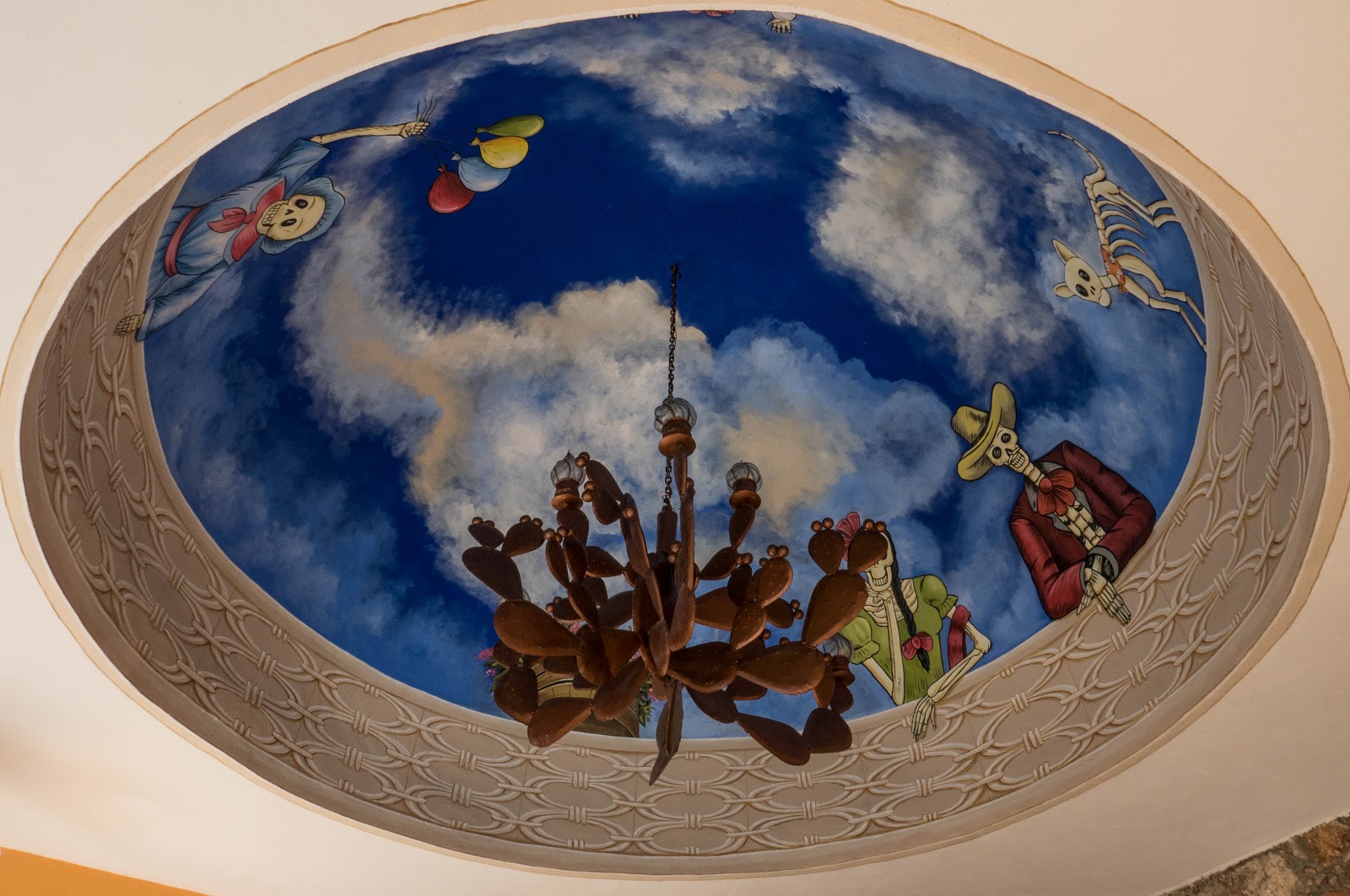

Dan a visitas (en inglés y español) la mayor parte de días a las 10:00 pero las reservas del avance son aconsejadas. A los participantes del viaje les piden hacer una donación mínima de 80 pesos que va a la institución benéfica local, como Clínica San Lucas así como a otra institución benéfica a través de la propia fundación benéfica de Venators.


Visits (in English and Spanish) are given most days at 10 am but advance reservations are advised. Tour participants are asked to make a minimum donation of 80 pesos which goes to local charities, such as the Clínica San Lucas as well as to other charities through the couple’s own charitable foundation.


Steve Katz of Blood Sweat and Tears with John Venator


Thursday, February 6, 2014

Instituto de Artes Gráficas de Oaxaca


El Instituto de Artes Gráficas de Oaxaca (IAGO) es un museo-biblioteca, creado por el pintor Francisco Toledo, a través de la Asociación Civil "José F. Gómez". Es una hermosa casa del siglo XVIII situada frente al convento de Santo Domingo y a un costado de la Plazuela del Carmen, sobre la calle de Macedonio Alcalá. La casa fue donada al Instituto Nacional de Bellas Artes (INBA) por la familia Toledo, con el propósito de crear un espacio idóneo para difundir el arte y exhibir la colección gráfica que el Maestro Francisco Toledo comenzaba a formar.  El proyecto se hizo en conjunto entre el INBA, la Asociación Civil José F. Gómez - presidida por el Mtro. Toledo y el Gobierno del Estado de Oaxaca.


El Instituto de Artes Gráficas de Oaxaca (IAGO) se inauguró en noviembre de 1988. Los principales temas que abarca la Biblioteca del IAGO son pintura, gráfica, dibujo, arquitectura, escultura, arqueología, diseño, bibliofilia, textiles, cerámica, arte popular, fotografía, cinematografía y literatura. Comprende los espacios geográficos e históricos más importantes y mantiene un desarrollo orientado al arte contemporáneo.


The Institute of Graphic Arts of Oaxaca (IAGO) is a museum, library, created by the painter Francisco Toledo, through the "José F. Gómez" Civil Association. It is a beautiful eighteenth century house opposite the convent of Santo Domingo and next to the Plaza del Carmen, on Macedonio Alcala Street.  The house was donated to the National Institute of Fine Arts (INBA) by the Toledo family, in order to create an ideal space to promote art and display the graphics collection the Maestro Francisco Toledo started to form.  The project was made jointly by the INBA, Civil Association José F. Gomez - chaired by Maestro. Toledo and the Government of the State of Oaxaca.


The Institute of Graphic Arts of Oaxaca (IAGO) opened in November 1988.  The main topics that the Library of the IAGO includes are painting, graph, drawing, architecture, sculpture, archaeology, design, bibliophily, textiles, ceramics, folk art, photo, cinematography and literature.  It includes the most important geographical and historical areas and maintains a contemporary art-oriented development.


La colección sobre Arte Mexicano es una de las más grandes, ordenada cronológicamente, desde el arte rupestre, arte prehispánico, colonial, moderno y contemporáneo; es importante su colección de cerca de treinta facsímiles de códices, que continúa acrecentándose. Cubre un amplio espectro de países, artistas, técnicas, estilos y movimientos artísticos. Los materiales que maneja son libros, catálogos, revistas, folletos y películas, en español principalmente, pero también en inglés, francés, alemán e italiano. Los fondos bibliográficos se adquieren con recursos otorgados por Francisco Toledo, gran número de amigos, lectores, galerías, museos e instituciones aportan donativos de publicaciones.  La Biblioteca sostiene, también, convenios de canje con otras bibliotecas e instituciones del país y del extranjero.


The collection of Mexican art is one of the largest, ordered chronologically, from the rock art, pre-Hispanic, colonial, modern and contemporary art. It has an important collection of about thirty facsimiles of codices that continues to grow.  It covers a wide range of countries, artists, techniques, styles and artistic movements. The materials that they maintain are books, catalogs, magazines, brochures and films, mainly Spanish but also in English, French, German and Italian.  The collections are acquired with funds granted by Francisco Toledo, a large number of friends, readership, galleries, museums and institutions provide donations of publications. The Library also maintains exchange agreements with other libraries and institutions of the country and abroad.


SERVICIOS:
- El IAGO, contiene una Biblioteca especializada en arte, con más de doce mil volúmenes que abarcan temas de pintura, escultura, arquitectura, bibliofilia, poesía, narrativa, ensayo, literatura infantil y juvenil, diseño industrial y gráfico, arqueología, fotografía, cinematografía, textiles, cerámica, arte popular.
- La Biblioteca , que se actualiza constantemente, alberga obras sobre música, danza y teatro, y cuenta con veinticinco suscripciones a revistas especializadas en arte y literatura. La Biblioteca tiene tres salas de lectura, y ofrece los servicios de préstamo interno y a domicilio, estantería abierta, consulta, banco de datos, hemeroteca, fotocopias y cineclub.
- El público puede seleccionar y tomar los materiales por ellos mismos y en caso de requerirlo, recibe atención individualizada de los bibliotecarios, quienes propician la comunicación personal para establecer un perfil de intereses de cada lector y estar en condiciones de satisfacer sus necesidades de información, recreación o simple curiosidad; de tal modo que la atención se da desde una orientación sobre las colecciones y los servicios de la Biblioteca y los museos, hasta la ayuda por temas de interés, la elaboración de bibliografías y la documentación, pasando por la referencia a las otras bibliotecas de la ciudad.


SERVICES:
- The IAGO contains a library specializing in art, with more than twelve thousand volumes covering topics of painting, sculpture, architecture, bibliophile, poetry, fiction, essays, children's literature, industrial and graphic design, archeology, photography, filmmaking, textiles, ceramics, folk art.
- The Library, which is constantly updated, houses works of music, dance and theater, and has twenty-five subscriptions to journals in art and literature. The library has three reading rooms, and offers home loans, open shelving, consulting, database, newspaper, copy and a film club.

- The public can select and take the materials themselves and in case of need, receive individual attention from librarians who foster personal communication to establish a profile of interests of each reader and be able to satisfy their information needs, recreation or simple curiosity, so that attention is given from an orientation to the collections and services of the library and museums, to aid topics of interest, development of bibliographies and documentation, through reference to other libraries in the city.


Tuesday, January 22, 2013

Natividad Amador


Natividad Amador lives in Juchitán de Zaragoza in the Isthmus of Tehuantepec.  She studied arts at the Universidad Autónoma Benito Juárez de Oaxaca, where she learned graphics and painting in the style of the Oaxacan school of painting.  Upon returning to Juchitán, she wanted to assimilate the uniqueness of her culture and to incorporate it in her painting.  She found it in the textiles and embroidery, which is also called chain stitch, characteristic of the huipiles of the isthmus.  It is thus that she began to develop painting in textile.  She learned the technique of embroidery and developed it to achieve the expression for which she was looking.  She found ways to stitch to give contrasts of tone and breadth in order to generate shadows and a sense of depth.  


Natividad Amador vive en Juchitán de Zaragoza, en el Istmo de Tehuantepec. Estudió artes en la Universidad Autónoma Benito Juárez de Oaxaca, donde aprendió gráficos y pintura en el estilo de la escuela de pintura oaxaqueña.  Al regresar a Juchitán, quisó a asimilar la singularidad de su cultura e  incorporarla en su pintura. Ella lo encontró en el textil y el bordado, que también es llamado tejido de cadenilla. Es característico de los huipiles del istmo.  Es así que comenzó a desarrollar la pintura en textil.  Aprendió la técnica de bordado y la desarrolló para conseguir la expresión que ella esperaba.  Ella encontró formas de coser para dar contrastes de tono y amplitud para generar sombras y una sensación de profundidad.


In December of 2010 the Museo Textil de Oaxaca presented an exhibition of her work called Pinthila (combining the spanish words, pintura e hilar).  In that exhibition there were 36 embroidered paintings realized in collaboration with her art teachers, the masters: Alejandro Santiago, Arnulfo Mendoza, Damián Flores, Eddie Martínez, Francisco Toledo, Gabriel Macotela, Gilberto Aceves Navarro, José Villalobos, Juan Alcázar, Luis Zárate, Miguel Ángel Charis and Víctor Chaca. In that work, carried out for two years, some of the works were translations of pictorial pieces, as it is in the case of Eddie Martínez; others were from working together in the studios of painters as Gabriel Macotela, and in some cases, the artist gave her a "sketch" and left that Natividad free to make a textile piece, as it happened with Demián Flores.  I have a Picasa web album of some that work.

A close up showing finished and unfinished areas

En diciembre del 2010 el Museo Textil de Oaxaca presentó una exhibición de su obra llamada Pinthila (combinación de las palabras, pintura e hiliar).  En la exposición hubo 36 pinturas bordados realizadas en colaboración con su maestros de arte, los maestros: Alejandro Santiago, Arnulfo Mendoza, Damián Flores, Eddie Martínez, Francisco Toledo, Gabriel Macotela, Gilberto Aceves Navarro, José Villalobos, Juan Alcázar, Luis Zárate, Miguel Ángel Charis y Víctor Chaca. En ese trabajo, realizado durante dos años, algunas de las obras eran traducciones de obras pictóricas, como es el caso de Eddie Martínez; otros eran de trabajar juntos en los estudios de pintores como Gabriel Macotela y en algunos casos, el artista le dio un boceto y dio Natividad libretad para hacer una pieza textil, como sucedió con Demián Flores. Tengo un álbum web de Picasa de algunas obras.


In these photos from a visit to her studio in Juchitán, you can see details in her current work and see how she progresses with a piece of her work.  There are also photos of the underside of the work.  She talked about the difficulty of convincing the public to accept textile on the same level as painting. There is an additional gallery of the visit to her studio here. Please take time to look at the photo galleries.

The underside

En estas fotos de una visita a su estudio en Juchitán, puede ver detalles con su obra actual y ver cómo progresa con una pieza de su obra. Hay también fotos de la parte inferior de la obra. Ella habló de la dificultad de convencer a la opinión pública a aceptar textil en el mismo nivel que la pintura. Hay una galería adicional de la visita a su estudio aquí. Por favor, tómese el tiempo para mirar las galerías de fotos.

una pieza diferente

la parte de abajo